FlemingClans.com

"Scotland's Fleming Clan: a Genealogical History" - coming in 2027!
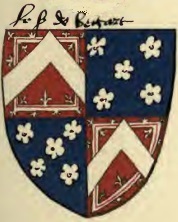 15th chief - James Fleming, 4th Lord Fleming
(c1527 - 1558)
Basic information about this person: \click here\
James, 4th Lord Fleming, inherited the lordship as a student after his father fell at Pinkie. In a short career he became Great Chamberlain for life, Warden of the West Marches and one of the commissioners who negotiated the marriage of Mary, Queen of Scots, to the heir of France. He died in France on that mission.
A young heir in wartime
James was born around 1527, the eldest son of Malcolm, 3rd Lord Fleming, and Janet Stewart, half-sister of King James V. He was a student at Glasgow in 1546, and the following year his father was killed at Pinkie. In September 1549 James took sasine of the family’s lands, including Cumbernauld, Biggar, Boghall, Lenzie and the Peeblesshire estates.
These were the years of the “Rough Wooing”, when Henry VIII and then Protector Somerset tried to force a marriage between the young Queen Mary and the English prince. James was taken prisoner by the English, and in November 1549 he was released in exchange for the English prisoner Sir James Wilsford.
In the Queen Mother’s service
In September 1550 James accompanied the Queen Dowager, Mary of Guise, to France, where the young queen was being brought up. His mother Janet and his sister Mary were both in the queen’s household there. In 1551 the Commendator of Holyrood, his cousin Robert Stewart, granted him lands at Saughton in return for his payments towards repairing the abbey after it was burned by the English.
He became a Privy Councillor in 1553 and on 12 November that year was appointed Great Chamberlain of Scotland for life. In 1556 the Regent, Mary of Guise, made him Warden of the West Marches and Lieutenant of the Middle Marches, with power of justice along the troubled Border.
Biggar Collegiate Church
James continued his father’s work at Biggar. In 1555 he persuaded his cousin Robert Stewart, Commendator of Holyrood, to endow the Collegiate Church of Biggar with the vicarage of Dunrod in Galloway, a union ratified by the queen in 1556.
The French marriage
In December 1557 Parliament chose James as one of eight commissioners to represent Scotland at the marriage of Queen Mary to Francis, the Dauphin of France. Before leaving he settled his estates on his younger brother John, reserving his own liferent, and appointed John Fleming, young laird of Boghall, to hold his courts while he was abroad.
On 19 April 1558 James was named in the marriage contract in Paris, and the wedding took place at Notre-Dame on 24 April. The commissioners refused to use their influence to have the Scottish crown sent to France for the Dauphin, which made them unpopular at the French court. On the way home several of them fell ill, and three died at Dieppe in November. James died in France on 18 December 1558, probably of fever. It was widely rumoured at the time that the commissioners had been poisoned.
Family and legacy
James married Barbara Hamilton, a daughter of the Duke of Châtelherault. Their only child, Jean, later became Countess of Cassillis. He also had two sons born outside marriage, Thomas and William, who became bailies of Perth. With no legitimate son, James was succeeded by his brother John. His nickname, “the Loyal”, reflects a short life spent entirely in the service of the crown.